.webp)
How to Declutter Your Home Before a Move
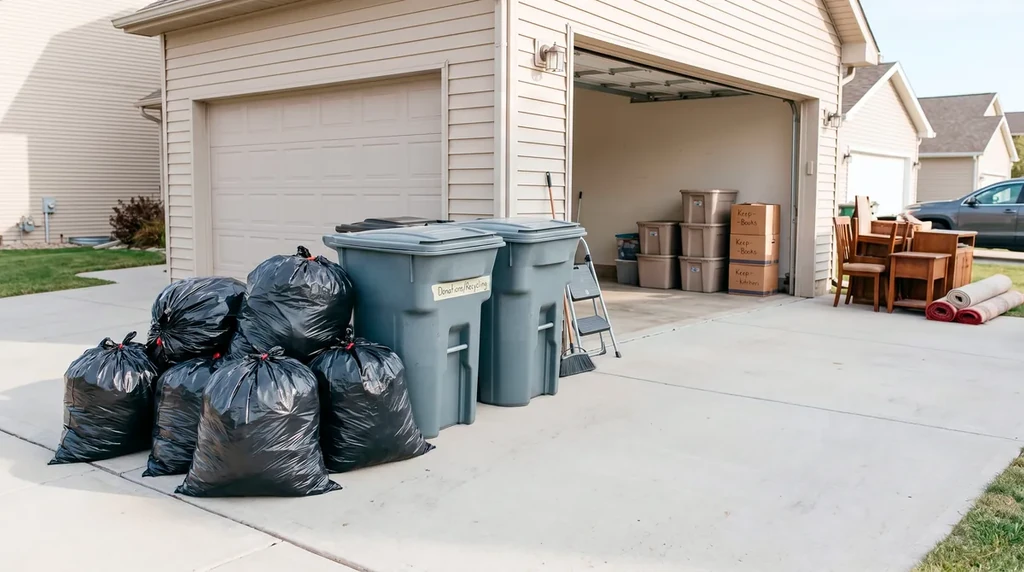
Moving has a way of exposing how much has quietly accumulated in a home. Open a hall closet, look behind the garage shelves, or pull everything out from under the bed, and the sheer volume of what you own becomes hard to ignore.
The usual advice is to sort everything into piles and get rid of what you no longer need. That works, but there's a better question to ask when you're moving specifically:
Is this item worth moving twice?
Anything you keep gets handled at least twice: packed, carried out, transported, carried in, unpacked, and given a place to live. If you wouldn't willingly do all of that for an item, it probably shouldn't make the trip. Decluttering before a move isn't about building a minimalist home; it's about making that call deliberately, before it becomes a box stacked in your new garage.
The One Question That Makes Every Decluttering Decision Easier
The biggest mistake people make is looking at each item and asking, "Do I still like this?" That's not quite the right question during a move. Ask instead: "Where will this go in my next home?" That small shift makes decisions much easier. A large dining table might be perfectly good but wrong for a smaller dining area. Gardening equipment may be unnecessary if the new place has no yard. Extra shelving that was essential in one garage can be redundant in a home with built-in storage.
Before sorting, learn what you can about the new space: the floor plan, room and closet measurements, and how your daily routine will change there. For any questionable item, run it through three tests: will you actually use it in the new home, is there a realistic place for it, and is it worth the effort and space required to move it. Two or three "no" answers usually mean you've found something that doesn't need to come with you.
Start With the Easy Decisions, Not the Sentimental Ones
Don't begin with family photos, childhood keepsakes, or boxes of old letters. Those are some of the hardest possessions to evaluate, and they can stall the entire process. Start instead with the nearly automatic decisions: expired pantry items, empty containers, broken household items, worn-out towels and linens, clothes that no longer fit, old paperwork, duplicate kitchen utensils, outdated electronics and cables, outgrown toys, and anything damaged you've been "meaning to fix." Think of this as a warm-up round that builds the habit of deciding quickly before you reach the possessions that need more thought.
Use Four Destinations, but Give Every Item a Deadline
Keep, sell, donate, discard: the categories aren't the hard part. Getting items actually out of the house is. A donation pile sitting in the guest room for three weeks is still clutter, and so is a chair you intend to sell but haven't listed. Give each category an exit plan.
Keep: items going with you should either stay in use or get packed right away if you won't need them before moving day. Avoid parking undecided items here just because you're tired of deciding.
Donate: pick where the donations are going and set a drop-off or pickup date. If you're planning to claim a charitable deduction, keep good records; the IRS notes in Publication 526 that donated clothing and household goods generally need to be in good used condition or better to qualify, and additional documentation applies above certain values.
Sell: moving creates a natural deadline. List an item for a set window, say one week, drop the price partway through, and donate it if it hasn't sold by your cutoff. The goal isn't squeezing every dollar out of every item; it's not spending your last night before the move surrounded by things still "for sale."
Discard or recycle: not everything belongs in household trash. Paint, solvents, automotive fluids, batteries, and pesticides often need special handling. The EPA's guidance on household hazardous waste recommends checking local collection options rather than pouring these down a drain or onto the ground. Deal with these early so you're not figuring out disposal rules on moving day.
Declutter in the Opposite Order From How You Live
If you use something every day, that's not where to start. Begin with the spaces that play the smallest role in your normal routine: attic, basement, garage, spare room, storage closets, and seasonal decorations first; then books, décor, extra linens, hobby supplies, and seldom-used kitchenware; then everyday clothing and commonly used items; and daily essentials last. This lets you build momentum without disrupting normal life, and it reveals just how much you've been storing rather than using. By the time you reach frequently used areas, you'll have had enough practice to move quickly.
For Duplicates: Which One Would You Reach for First?
Most homes have duplicates: six frying pans but two in regular use, four sets of sheets for one bed, three nearly identical jackets, more coffee mugs than the household could ever need at once. Don't ask whether each one is technically useful; almost anything can be under the right circumstances. Instead, line similar items up and ask which one you'd reach for first. Keep the best-performing or best-fitting version, then decide how many backups you realistically need. This works especially well in kitchens, linen closets, wardrobes, and bathrooms.
Don't Pay to Move Things You Already Plan to Replace
Moves tend to surface items that are technically usable but nearing the end of their life: an unstable particleboard bookcase, a mattress you're already planning to replace, a desk that won't work in the new office. Moving those means spending time, truck space, and effort on something you expect to replace soon anyway. Before packing anything bulky, ask whether replacing it after the move actually makes more sense than transporting it. That's not a reason to throw away something perfectly good; selling, donating, or passing it along is usually the better option. The point is weighing total effort rather than treating "I already own it" as an automatic reason to move it.
Measure Furniture Before It Becomes a Moving-Day Problem
Large furniture deserves its own pass: sofas, bed frames, mattresses, dining tables, desks, dressers, bookcases, and large appliances. Compare those measurements against the new home's rooms, doorways, hallways, stairs, and any tight access points. Don't stop at "will it fit in the room." Ask whether it will fit while still leaving room to actually use the space. A sofa that technically clears the doorway but overwhelms the living room may not be worth the trip.
Give Sentimental Items Their Own Session
Eventually you'll reach the harder possessions. Don't make those calls while simultaneously trying to empty a closet or pack a bedroom; set them aside for a separate, unhurried session. Ask whether you value the object itself or what it reminds you of. Some things deserve to stay. Others can be photographed before being donated or passed along, and family heirlooms are often better given directly to a relative who actually wants them than moved and stored again for another decade. If you're keeping something specifically for a child or family member, ask them first whether they actually want it.
Be Careful With the "Maybe" Pile
A small maybe pile can keep momentum going when one hard decision threatens to stall an entire room. A large one just becomes another room to sort later. Set a physical limit, one box or one shelf, and revisit it at the end of each room using the same test as everything else: would you actually pack this, carry it out, transport it, carry it in, unpack it, and find it a home? If that sounds like too much effort for the item in your hand, you likely already know the answer.
When Storage Helps, and When It Only Delays the Decision
A storage unit can be genuinely useful during a move, but it works best when you know exactly why something is going into it. Closing dates don't always line up, a move might be temporary before you settle into a permanent home, renovations can delay where furniture belongs, or downsizing might mean you need more time to sort through valuable or sentimental items thoughtfully. In situations like these, temporary storage creates real breathing room between one home and the next.
What storage shouldn't become is a destination for everything you didn't want to decide about. Before anything goes into a unit, give it a purpose: seasonal belongings you're definitely keeping, furniture for a future room, items waiting on renovations, belongings from a temporary housing period, or possessions that genuinely need more deliberate sorting.
If your move takes you anywhere across Arizona or California, STORAGExperts storage locations offer sizes and amenities that vary by facility, so it's worth comparing what's available near your specific move before you commit to a unit. Once you know roughly what's staying, our storage unit size guide makes it easier to choose the right size the first time, instead of paying for space you don't end up using. The goal isn't to move clutter from your house into a storage unit; it's to use storage deliberately for what you've genuinely chosen to keep.
Pack as You Finish Each Area
Decluttering and packing don't have to be fully separate projects. Once you've decided what stays in a low-use area, pack the keepers you won't need before the move right away, rather than handling the same items over and over. Just make sure decluttering happens before anything goes into a box. Our guide on how to pack items for a storage unit can help once you've made the cut, and if some of those boxes are headed to storage, our guide to labeling boxes for easy retrieval is worth following too.
Create a "First Week" Category Before Everything Gets Boxed
Most decluttering checklists miss one category entirely: what you'll need immediately after the move. Don't let these disappear into the general "keep" pile. Set aside what you'll realistically need for the first several days: medications, important documents, chargers, toiletries, a few changes of clothes, basic cookware, coffee or breakfast supplies, pet and children's essentials, basic cleaning products, and bedding and towels. Keep this bin separate from anything headed to storage, especially if you won't be unpacking the whole home on day one.
Do a Second Pass After You Think You're Finished
Your first pass removes the obvious excess. Your second pass, ideally a few days later, is where the move actually gets lighter. Items you hesitated over the first time are often easier to release once you've seen how much you're already taking. Pay particular attention to closets, cabinets, drawers, under beds, garage corners, and any boxes left over from a previous move. That last one deserves special attention: if a box has sat unopened since your last move, don't automatically move it again. Open it and decide this time.
A Simple Decluttering Timeline
Four or more weeks before moving: start with garages, spare rooms, storage areas, seasonal belongings, and large furniture. This is also the best window to list higher-value items for sale, since you'll have time to find buyers.
Two to four weeks before moving: work through bedrooms, closets, books, décor, linens, hobby supplies, and less frequently used kitchen items. Schedule donation drop-offs rather than letting bags accumulate.
One to two weeks before moving: finish everyday rooms and begin packing what you won't need before moving day. Confirm what's going directly to the new home versus into temporary storage.
Final week: decluttering should mostly be done. Focus on essentials, final packing, and a last check of every cabinet, closet, drawer, and outdoor area. This week is for executing the move, not deciding whether you still need a waffle maker you haven't touched since 2019.
The Goal Isn't Fewer Things, It's Fewer Decisions After the Move
Decluttering before a move is often framed as a way to own less. That's only part of it. The bigger advantage is deciding what belongs in your next home before you're tired, surrounded by boxes, and wondering where everything should go. Every item you leave behind is one less thing to wrap, lift, transport, unload, and eventually reconsider.
Frequently Asked Questions
How far in advance should I declutter before moving?
Starting several weeks out gives enough time to make thoughtful decisions, sell valuable items, and arrange donations properly. Larger homes or households with years of accumulated belongings may need much more time.
Should you declutter before or after moving?
In most cases, before. You avoid packing, transporting, and unpacking things you no longer want. Some decisions may reasonably wait if you're heading into temporary housing or don't yet know what will fit in the new place.
What room should I declutter first before moving?
Start with a low-use area that holds relatively few sentimental items: a guest room, linen closet, storage closet, or a section of the garage. It builds momentum without disrupting your everyday routine.
Is it better to sell or donate things before moving?
It depends on value and how much time you have. Selling higher-value furniture, electronics, or tools can be worthwhile if you start early. As moving day gets closer, donating usable items is usually more practical than waiting on a buyer.
Should I rent a storage unit when moving?
A unit can help when move-in dates don't align, you're in temporary housing, you're renovating, or you're downsizing and need time to sort through belongings thoughtfully. It works best for things you've deliberately decided to keep, not as a default home for unwanted clutter.
How do I declutter sentimental belongings before moving?
Handle them separately from ordinary household clutter, in their own unhurried session. Ask whether you value the object itself or the memory attached to it, and consider photographing items you're ready to let go of, or offering family pieces directly to relatives who want them.
Right-Size Your Next Move
Keep what deserves a place in the next chapter, sell or donate what doesn't, and when you have belongings worth keeping, but your new home isn't ready for them yet, use storage as a deliberate part of the plan rather than a place to postpone decisions. STORAGExperts provides storage across Arizona and California for exactly these situations, moves, transitions, downsizing, and the gap between one home and the next. Explore our storage locations near you to find the space that fits what you're actually keeping.